The story
The Fire Service warns:
The consequences of burning grass can be very dangerous.
In spring, just as nature comes back to life, people decide to burn off grass. Meadows, shrubs and forests go up in flames. The practice is not only very harmful to the soil; above all it is a serious threat to the whole natural environment around us. It endangers not only nature but also people, who can easily be poisoned by smoke or burn together with the grass, unable to escape a fire that spreads at the speed of the wind.
Every spring the same scenario repeats itself.
A person burns off grass, convinced the fire can be controlled; yet in the blink of an eye the flames, carried by an innocent breath of spring wind, spread and the fire consumes ever larger areas, moving on to trees and houses, and often takes human lives too, leaving behind only misery the colour of ash. By the time the fire service has to be called, it is often already too late.
Despite many appeals and the evidence of how harmful grass burning is, every year the Fire Service is called to thousands of such fires, which generates enormous costs for the budget — that is, for all of us.
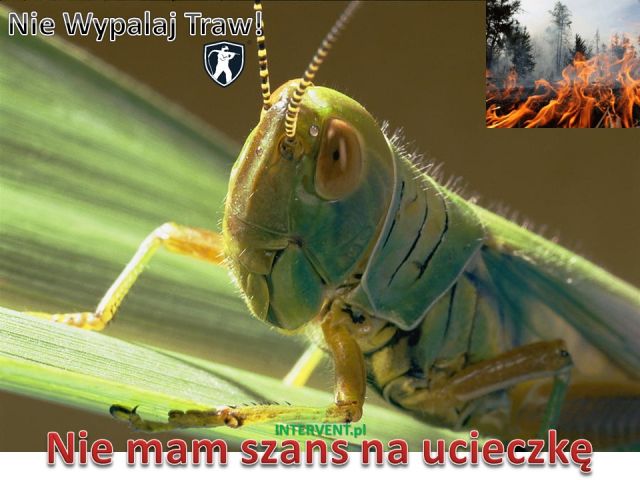
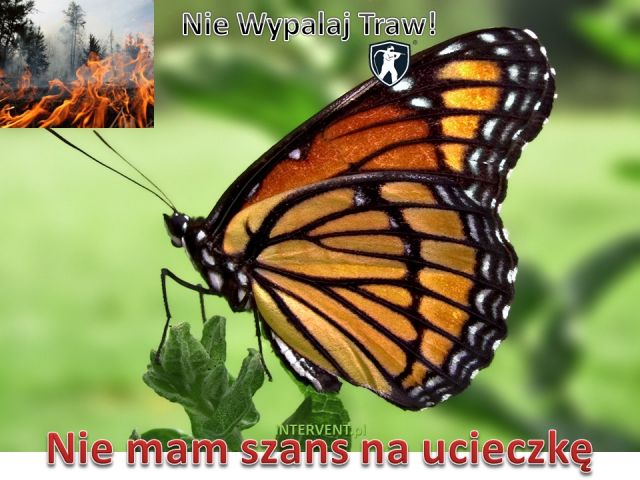
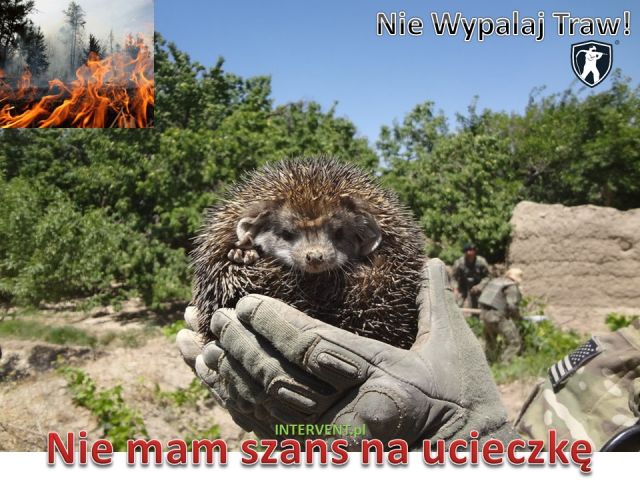
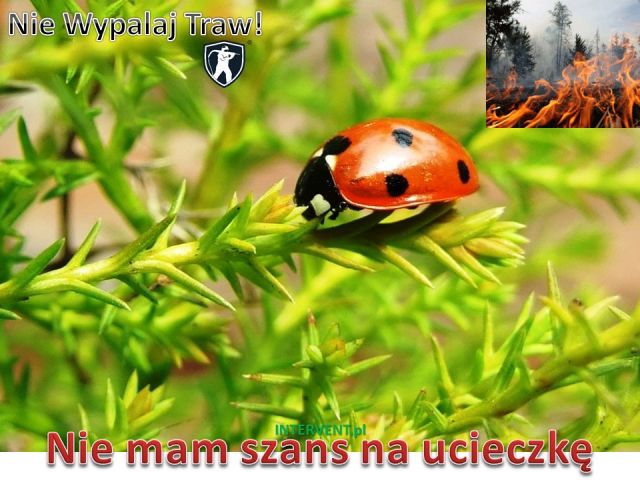
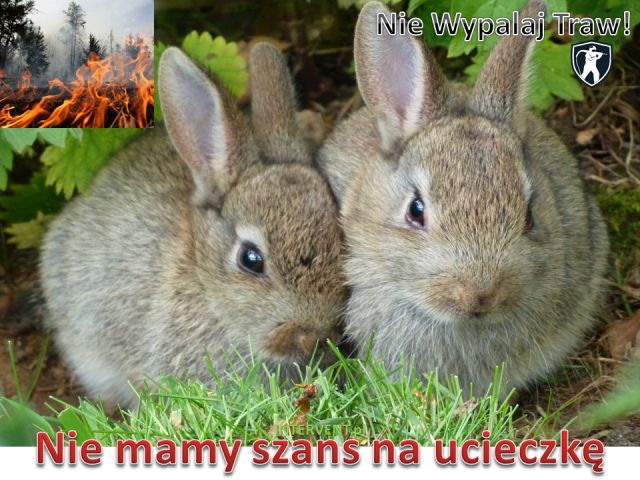
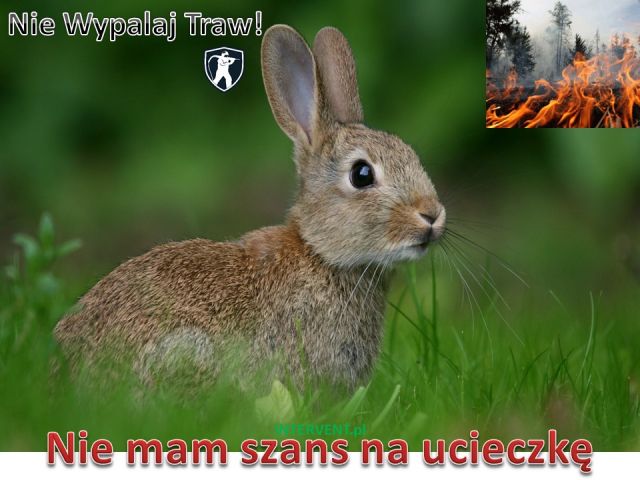
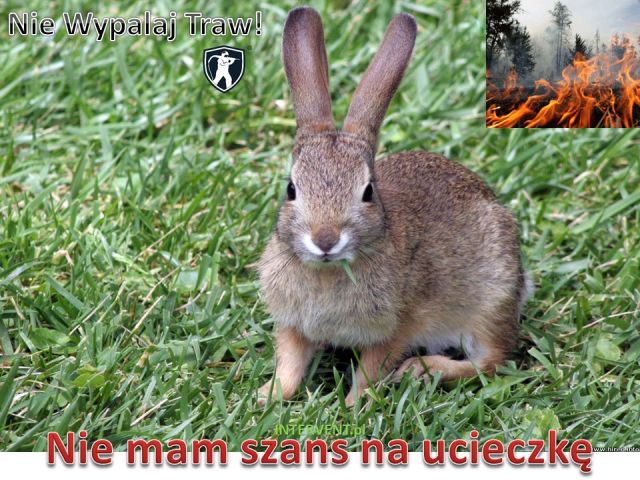
Contrary to ingrained myths, grass ash does not fertilise the soil; it only destroys the meadow ecosystem. Environmental specialists point out that it brings the soil no benefit at all — on the contrary, it does nature a great deal of harm. Larvae, insects, small creatures, birds' nests and small animals such as hares and hedgehogs perish in the grass. Rare plant species perish too, as do trees that need many years to grow and burn in a few moments.
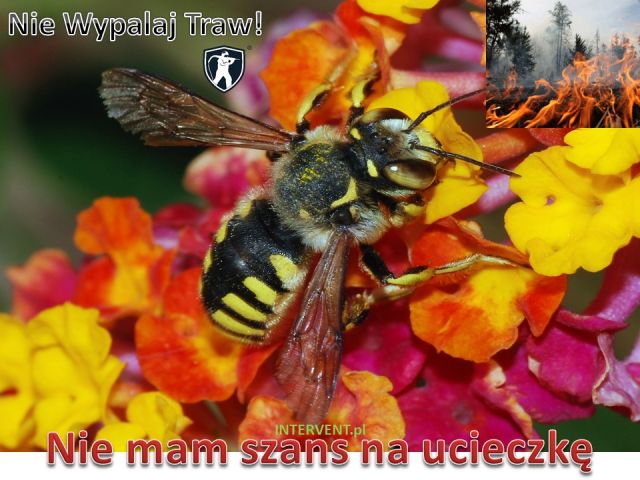
They have no chance of escape.
The air that we and the animals breathe is polluted with the toxic components of smoke. The breeding sites of many species that nest in grass, in shrubs and in trees are burnt out. Nests that are already occupied, with eggs or chicks, burn as well. Bees and other insects die in the flames, which reduces the number of pollinated flowers and, as a consequence, lowers crop yields. Animals that lose their bearings in the smoke die, including large ones such as roe deer, red deer and wild boar. The flames destroy the natural habitat of pheasants, partridges, hares, hedgehogs and many others. Many useful vertebrates die in the flames, or from the heat and the smoke: amphibians and reptiles (frogs, toads, lizards) and mammals (moles, shrews, foxes, badgers, martens, voles and other small rodents). Defenceless and innocent, they have no chance of escape.
Penalties for burning grass
Penalties for burning grass are laid down in several acts of law. Burning grass is prohibited under the Code of Petty Offences, which provides for a fine of up to PLN 5,000.
Under the Criminal Code, burning grass that ends in a fire of buildings endangering the life or health of many people, or property on a large scale, is punishable by imprisonment from one to ten years. Causing an immediate danger of such events is punishable by imprisonment from six months to eight years.
Under the environmental protection act, anyone who burns meadows, pastures, wasteland, ditches, roadside strips, railway lines, reed beds or rushes is liable to detention or a fine.
The Forest Act also prohibits burning grass. It states that in forests and on land within forests, and within 100 metres of the forest boundary, activities that may cause danger are prohibited, in particular:
- lighting fires outside places designated for that purpose by the forest owner or the forest district manager,
- using an open flame,
- burning off the top layer of soil and plant residues.
Penalties from ARiMR
The agency (ARiMR, the Agency for Restructuring and Modernisation of Agriculture) may penalise a farmer who burns grass for failing to observe good agricultural practice, which is a condition of receiving direct payments. The penalty may therefore be a reduction of about 3% in the payments due for the year. The sanction is not fixed, however, and is set individually in each case. Depending on the degree of the farmer's fault it may be raised to as much as 5%. If the farmer has burnt grass persistently and deliberately, ARiMR may withdraw the direct payments for the year entirely.
Prepared by: Dariusz Stachlewski
The article uses some legal information from the Infor.pl portal.